
Sunday, 9 April 2017
Thursday, 23 February 2017
Praise for Trace your Roots

Reviewer Lori Reed has given Trace your Roots a smashing five-stars on Net Galley. Here's what she had to say:
This book is a invaluable took in the study and research of our ancestors. I am starting research going back to the Revolutionary War and Pilgrims. that can be quite daunting. With the wisdom in this book my job finding my ancestors and their records is infinitely more organized and simple. This is written for any beginning genology researcher as well as those seasoned will all find valuable assistance here. I appreciated the attention to detailed and extensive information. With this book in my hand I will be much more successful in my search.
.

Wednesday, 28 September 2016
Transportation
 |
| Picture courtesy of Wikipedia |
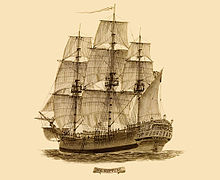
What better way to rid the country of its undesirables than to send them somewhere else?
Many convicted criminals were transported to
the penal colonies, which was an alternative punishment to the hangman’s rope.
The cost to the state wasn’t great, no first
class sea voyages for these people, and so everything swung along nicely for
quite some time.
The American War of Independence put paid to
the practise of hosting convicts in the latter quarter of the eighteenth
century. But in 1787, Britain had another idea and transportation to Australia
began. It is said that some 160,000 convicted criminals – men, women, and
children – were transported to Australia.
Fortunately for us, there are many records
we can check in order to trace our ancestors’ journeys.
Trace your Roots gives full details of where to search.
.
Sunday, 20 September 2015
The history behind your surname

Here's an interesting thing to try...
On the Ancestry website, type in your family surname and find out all kinds of facts and available records related to it.
Found a few things searching my own family name of Kilminster from Wilshire and Gloucester including emigration records and passenger lists.
Do your search HERE
.
Wednesday, 12 August 2015
Broadening your census horizons

My guest, Lynne Black tells us how broadening her census searches helped her keep track of her family's whereabouts, which led to further interesting findings.
Mary Sarah Young was born in 1867, the fourth daughter, and fifth child of seven of Hannah Halliday and George Shields Young.
Although born in Gateshead in County Durham, her family moved to Yorkshire when she was young and she grew up in Shipley.
Mary came from a well-educated family. Several of her older sisters had been governesses or worked in schools, and at the age of 24 in 1891 Mary herself was working in Shipley as a School Assistant Mistress.
However she had vanished from Yorkshire in the 1901 census and by broadening my search I found her living down in Okehampton, Devon with her mother Hannah and two sisters Marion and Edith. Mary was single and her family all widows; Mary was the only one in the household working, and by this time she’d had a promotion to Schoolmistress.
It can’t have been too long after that before she and mother Hannah had moved on again, to Pembrokeshire. Her youngest sister Edith accompanied them but didn’t stay that long; she had fallen for a surveyor from Okehampton and they married in Pembrokeshire in 1905 before moving back down to Devon.
Her sister Dora came up from her home in Essex to visit in October 1908, but shockingly died during her visit, leaving a husband and 3 young children.
By 1911 Mary had been appointed as a Head Teacher of an elementary school owned by Pembrokeshire County Education Authority. She and her mother were living in Rhydberth, Tenby.

The Tenby Junior School website tells me: “Tenby Council School was built in 1915 while the First World War was at its height. It was officially opened in June 1916 by Mr S.B. Sketch, J.P., C.C., Chairman of the Education Committee. The school was situated in Greenhill Road and pupils came from the School which had previously been held beneath the Methodist Chapel in Warren Street, which was subsequently demolished in the 1980s. The Headmaster at this time was Mr J Howells.” Given Mary’s religious background, I’m wondering whether she taught at the Warren Street Chapel. Pembrokeshire Record Office website has some potential for archive material if I want to follow it up at a later date.
 |
| Mary with her siblings |
Eight years later in 1919, after the first world war which took her nephew George Shields Young, Mary is also found back up in Yorkshire, listed on the electoral roll in the School House in Oldfield, where she was still living in 1926.
I googled ‘Oldfield School West Yorkshire’ and it came up with the website of the Oldfield Primary School which has a lovely image of an old school building on the home page. It’s been taken on a frosty morning and I can just picture Mary wrapped up well walking up the path to the door. I rang the school and the secretary said that she was actually speaking from the School House, which I really loved.
By 1929, aged 62, she has moved to Harrogate, Yorkshire, where she lived for the rest of her life.
She died, aged 75, in the midst of the second world war, on Christmas Day 1942. In her will left effects of £871 5s 1d [£25K in 2005 money] to her brother and her nephew.
.
.
Saturday, 8 August 2015
Summer Sale

Trace your Roots is in Crooked Cat's Summer Sale for a bargain price of just 99p. That's even cheaper than chips (and far more useful).
Buy it HERE
This is what a recent Amazon reviewer had to say:
"Whether or not you're tracing your family tree, this is an interesting read by Maureen Vincent Northam. It is laid out in stages and makes it look easy if you decide that it's something you may do one day. If you're already wanting to follow your family heritage, then this is a book for you."
.
.
Thursday, 9 July 2015
Was Beer the end of Mother’s Ruin?

Welcome to my guest Roland Clarke who tells us about his famous family, researching on Wikipedia - and gin!
When I was growing up, I was often told that my Quaker ancestors had helped bring an end to the repercussions of ‘Mother’s Ruin’ by promoting beer.
This made some sense as the family had been involved with the
brewing firm of Truman
Hanbury & Buxton.
So when Maureen Vincent-Northam asked me to write about
those ancestors, I began wondering whether that was just a family legend, whether
that would be an interesting starting-point. Was there was some truth behind the
story?
 |
| Thomas Fowell Buxton |
Although Thomas Fowell wasn’t a Quaker, as they were, he was
a committed social reformer and in the forefront of the abolitionist movement,
succeeding William Wilberforce as its parliamentary leader in the House of
Commons, having been elected an MP in 1818.
And as Wikipedia says, ‘In 1808, Buxton's Hanbury family
connections led to an appointment to work at the brewery of Truman, Hanbury & Company, in Brick Lane, Spitalfieds,
London. In 1811 he was made a partner in the business, renamed Truman,
Hanbury, Buxton & Co. Later he became sole owner.’
 Although I am always wary of treating Wikipedia as gospel, I
find it is a useful starting point for any research, and from there I can
corroborate the facts using other sources. In this case, my late mother had a
lot of Buxton books that she was given by my paternal grandmother, who was born
Rebekah Mary Buxton in 1900 – a direct descendent of Sir Thomas Fowell Buxton.
Among these was “Buxton
the Liberator” by R H. Mottram in 1883, which confirms almost all the facts,
as do some of the other sources that I found – referenced in this article or at
the end.
Although I am always wary of treating Wikipedia as gospel, I
find it is a useful starting point for any research, and from there I can
corroborate the facts using other sources. In this case, my late mother had a
lot of Buxton books that she was given by my paternal grandmother, who was born
Rebekah Mary Buxton in 1900 – a direct descendent of Sir Thomas Fowell Buxton.
Among these was “Buxton
the Liberator” by R H. Mottram in 1883, which confirms almost all the facts,
as do some of the other sources that I found – referenced in this article or at
the end.
There were no direct references to Mother’s Ruin in any of these initial sources, but on Historic UK I
found an article on Mother’s Ruin, and in it the
following sentences:
“Gin had become the poor man's drink as it was cheap, and
some workers were given gin as part of their wages. Duty paid on gin was 2
pence a gallon, as opposed to 4 shillings and nine pence on strong beer.”
“Gin was the opium of the people, it led them to the
debtors' prison or the gallows, ruined them, drove them to madness, suicide and
death, but it kept them warm in winter, and allayed the terrible hunger pangs
of the poorest.”
And:
“In 1830 the Duke of Wellington's administration passed the
Sale of Beer Act, which removed all taxes on beer, and permitted anyone to open
a Beer Shop on payment of a two-guinea fee.
This Bill virtually ended the traffic in gin smuggling.
By the end of 1830 there were 24,000 beer shops in England
and Wales, and six years later there were 46,000 and 56,000 Public Houses.”
In the same year, there was, according to Wikipedia, the Beerhouse Act,
which would have had the
same effect.
Did Thomas Fowell Buxton vote in favour of either Act? Would
a brewer vote to enable anyone to brew and sell beer on payment of a licence
costing two guineas?
The Duke of Wellington’s administration were Tories, while
Buxton was nominally a Whig. On his election in 1818, his friend and future
brother-in-law, Joseph Gurney, wrote to him arguing: “Do not let thy
independence of all party be the means of leading thee away from sound
Whiggism. Let us take special care to avoid the spirit of Toryism. I mean that
spirit which bears the worst things with endless apathy, because they are old.”
The Hansard record of the passage of the Beer Act in 1830
include an interesting record on Mr
F Buxton’s opinion.
“Mr F Buxton, while admitting that the fears
entertained of this measure, as far as the brewers were concerned, had been
greatly exaggerated, contended that the loss to the publicans would be as
great, if not greater, than was anticipated. There had only been one or two
instances of petitions being presented in favour of the clause under the
consideration of the House, while hundreds had been presented against it. He
did not mean to say that the measure would be positively bad; but it would at
any rate, be questionable. By it public-houses might be opened during all hours
of the night, and in any places, and no security was given for their being
properly conducted, for the fine or penalty proposed by the Bill was no
security at all. At present there was some difficulty found in keeping
public-houses in good order, though the publican was liable to have his license
taken away, which was equal to a fine of 500l. What then would be the
state of the case where the fine was only 2l.10s. He conceived that the
other parts of the Bill contained innovations, sufficient to satisfy the
advocates of free-trade, and he hoped the House would refuse to accede to the
introduction of any more. If at a future period it should be found necessary to
make any fresh innovations, then let them be done, but he thought some consideration
ought at present to be extended to the publicans. He should support the
Amendment of the hon. Member, which was exactly in accordance with a clause
introduced into the bill of an hon. and learned Gentleman some years back.”
At this stage of my investigations, I sense that Buxton
voted for the Bill, once the amendment under discussion was defeated, and that
the large breweries went on to benefit from the growth in outlets. And Mother’s
Ruin met its demise – for a while.
Of course the fascination with my ancestors doesn’t end
there. Sir Thomas Fowell Buxton’s greatest achievement was as an abolitionist,
helping to end the slave trade in the British Empire. And then there are the social
and criminal justice achievements of his Quaker in-laws the Gurneys, who
continued their connection with the Buxton family down the generations. Maybe I
will talk about them another time.
For now, thanks Maureen for letting me ramble.
Further links:
Sir Thomas Fowell Buxton
Trumans, brewing and gin
.
Subscribe to:
Posts (Atom)